 San Rafael Sub-Zero
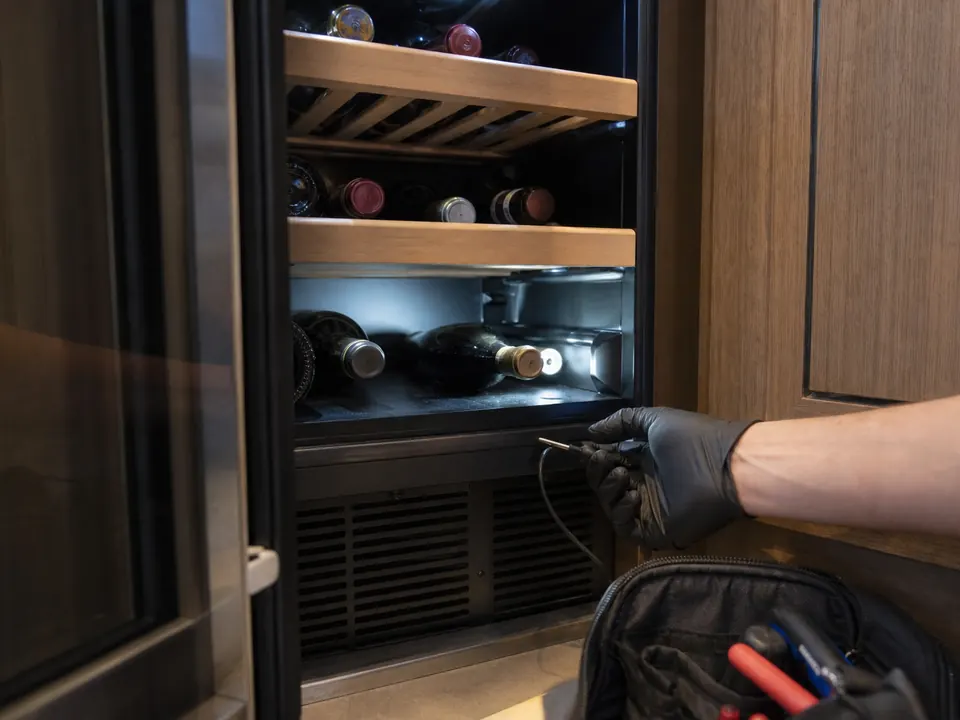
You open the cellar door off the dining room, glance at the dial, and the upper rack feels a touch too warm for the reds. Nothing has alarmed; nothing is leaking. The column is just no longer holding the number you set it to. In a town an hour from Napa and Sonoma, where a San Rafael collection can run to the hundreds of bottles, that quiet drift is exactly the call we want before it becomes a loss.
Sub-Zero builds genuine built-in wine storage — integrated columns and undercounter cabinets with real dual-zone control — and the way one fails is specific. Here is what is usually behind the warm drift, in the order we tend to find it.
Start with the dual zone, because that is where drift shows first
A Sub-Zero wine column runs two independently controlled zones so reds can sit warmer than whites in the same cabinet. Each zone leans on its own thermistor to tell the control board what it is reading. When one of those sensors drifts out of calibration, the board chases a phantom number — it thinks a zone is colder than it is and backs off cooling, so the rack creeps warm while the display still shows your setpoint. That mismatch between what the dial says and what a thermometer on the shelf says is the classic dual-zone fault, and it is a bounded repair: we read the sensor's resistance against the factory curve and replace only the one that has wandered.
The gasket and the UV-treated glass door belong in the same first look. A column tucked into a warm Terra Linda dining room loses its seal slowly; once the gasket sweats or the glass seal tires, the warm room leaks past it and the upper zone is the first to give. We check the door's pull and the gasket channel before condemning anything electronic.
When the whole cabinet runs warm, look at airflow and the sealed system
If both zones drift together rather than one, the cause is usually upstream of the sensors. The condenser coil pulls dust the way every built-in does, and a loaded coil cannot shed heat — the compressor runs longer and hotter and still loses the setpoint on a warm afternoon. In the older homes around Dominican and Gerstle Park, where a column is often boxed tightly into custom millwork, the grille airflow gets pinched by a new toe-kick or filler panel and the same starvation follows. Cleaning the coil and restoring the clearance fixes a surprising share of warm cabinets outright.
Behind that sits the evaporator fan and the sealed system itself. A tired evaporator fan stops carrying cold air across the racks evenly, leaving a warm pocket; a refrigerant leak or a failing compressor is the deeper, rarer fault. We put gauges on the sealed system only after the cheap, common causes are ruled out, and we show you the pressures rather than guess at them.
Vibration, sediment, and the repair-vs-replace question
Wine storage has one demand a refrigerator never makes: it has to be still. A column with a worn compressor mount or an out-of-balance fan transmits a faint, constant buzz into the racks, and over months that vibration stirs sediment in older bottles — the kind of damage you do not see until you decant. If your cabinet has started to hum where it used to be silent, that is worth a look on its own, separate from any temperature complaint.
As for whether to fix or replace: a Sub-Zero wine cabinet is built to run well past a decade, and almost every fault above — sensor, gasket, fan, coil, control board — is a straightforward repair on a sound cabinet. The one place the math gets close is a major sealed-system repair on a much older unit, and even then we put the numbers in front of you before recommending anything. The $89 service call goes toward the repair, and we work to protect what is on the racks while the diagnosis runs.