 San Rafael Sub-Zero
Noise diagnosis · San Rafael & Marin
Sub-Zero Refrigerator Making Noise in San Rafael
Buzzing, clicking, rattling, or a hum that suddenly seems too loud? Read the sound first. Here is how we tell a healthy Sub-Zero from a failing fan, relay, or compressor across San Rafael and Marin.
4.9/5 · 961 verified customer reviews
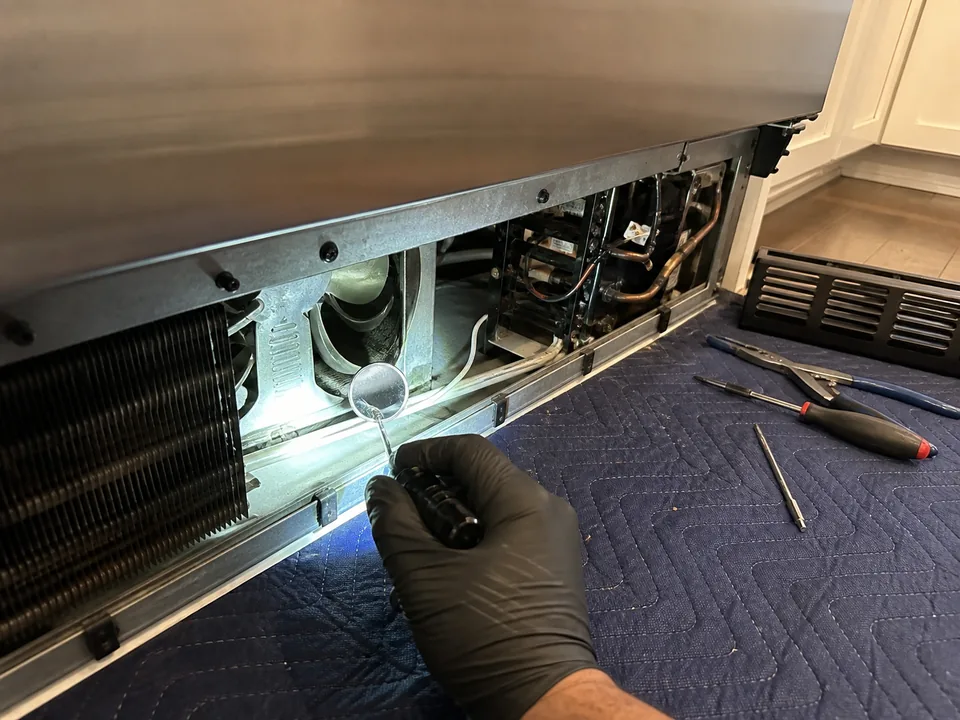
No refrigerator is truly silent, and a healthy Sub-Zero least of all. A working built-in produces a small orchestra of expected sounds: a low compressor hum, the steady push of two fans, the soft trickle of refrigerant changing state, and a measured click every time the defrost cycle hands off. The trick in a San Rafael kitchen is not silencing the box — it is telling the ordinary sounds apart from the one new noise that means a part is wearing out.
That job is harder here than the appliance deserves, because so many Marin kitchens make noise carry. The open great-room layouts that dominate Terra Linda and the Marinwood Eichlers let a perfectly normal compressor hum travel clear across the room, while the tight cabinet alcoves in older Gerstle Park and downtown homes turn the same hum into a resonant drone you feel as much as hear. Describing the sound precisely, and where it comes from, is what lets us decide whether you need a repair or just a clearer set of expectations.
Read the sound
What each Sub-Zero noise is telling you
Locate it yourself
Five steps to pin down the noise
- Pin down the where. Stand at the grille, then open the door and listen inside. Grille noise is usually the condenser fan or compressor; in-cabinet noise is the evaporator fan or ice-maker.
- Clean and reseat the grille. Vacuum the condenser and make sure the lower or upper grille is clipped in flat. A loose panel and a dust-bound coil cause a large share of the rattles and buzzes we are called about.
- Check that the unit is level and clear. A built-in that has shifted in its cabinet, or one with no breathing room at the grille, transmits vibration into the surrounding millwork. Confirm it sits level with clearance at the top vent.
- Time the noise against the cycle. Note whether the sound runs constantly, only when the compressor kicks on, or on a schedule with the ice-maker. That timing tells us which component to inspect first.
- Call if it pairs with poor cooling. Any new noise that arrives alongside a warm compartment is worth a prompt diagnostic — a noisy, weak compressor should not be left to run itself to failure.
When noise is urgent
The sounds that should not wait
A hum or whir on its own is rarely an emergency. The combinations that are: a hard, repeated click with a unit that will not stay cold, a grinding or screeching that climbs over days, or a deep vibration paired with a warm compartment. Those usually live in sealed-system and compressor territory, where a short-cycling compressor can be both loud and weak. If the box is also warming, start at freezer not freezing or not cooling so the noise and the temperature get read together.
Keep going
Related San Rafael Sub-Zero pages
Book noise diagnosis
Quiet a noisy Sub-Zero in San Rafael
Note the sound, where it comes from, and when it happens. Have the model and serial ready so we arrive prepared.