4.9 / 5 from 229 verified repairs
Owner rating across our wider Bay Area Sub-Zero service network.
★★★★★
Technical verification guide
Do not treat a Sub-Zero alarm code as a universal parts chart
What does a Sub-Zero error code mean in San Rafael?
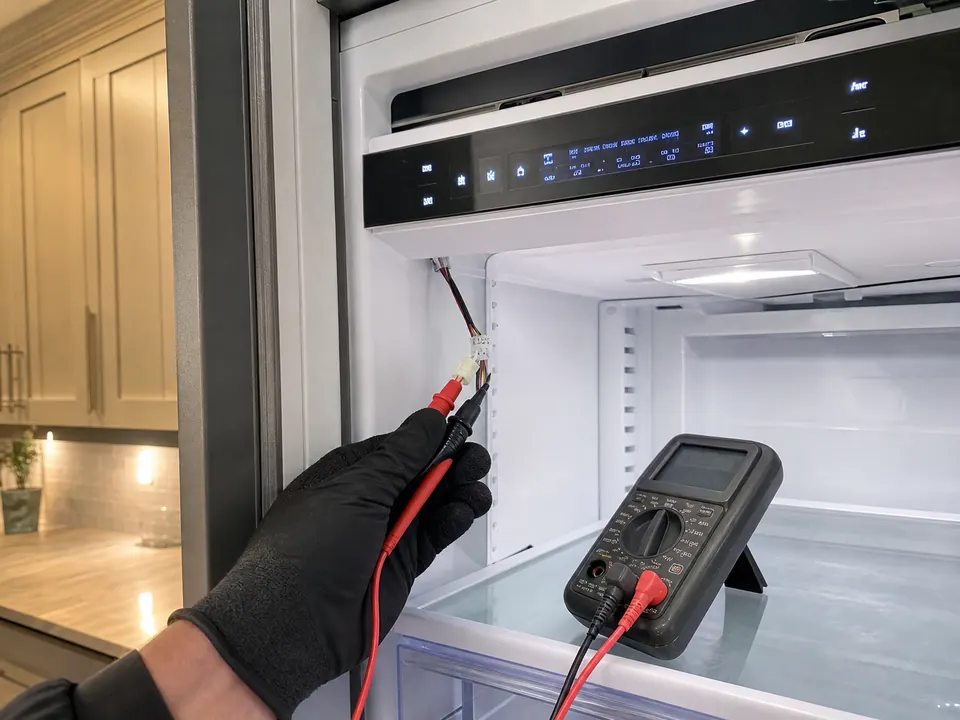
A flashing Sub-Zero code or alarm in a Sun Valley kitchen near 94901 narrows the fault but never decides it; San Rafael Sub-Zero Repair confirms the model-specific code against sensor resistance, harness continuity and an independent cabinet temperature before any part is named. Call (415) 683-1487 to book a code-reading visit.
A Sub-Zero on a Peacock Gap or Sun Valley call shows alarms by behavior, not a universal numeric chart: a flashing "Service" light, a "Vacuum Condenser" reminder, a door-ajar or over-temp alarm, or fresh-food-warm airflow. Each meaning is read by model and serial, then confirmed with sensor and temperature checks before any part is named.
Alarm and display checks should separate a sensor fault from a control-board or airflow problem.
Read-by-model reference
Sub-Zero error codes & alarms list (San Rafael)
Sub-Zero signals by behavior, not a universal numeric chart. Use this as a starting list, then verify the exact meaning by model and serial before any part is named.
Alarm / display behavior
What it usually points to
What to do
Flashing or solid "Service" indicator
A stored fault, sensor, or control-board condition the unit wants checked
Photograph the display and verify by model/serial; do not swap the board on the symbol alone
"Vacuum Condenser" reminder or unusually long run times
Restricted heat rejection, often packed coils from Glenwood and Country Club hillside dust
Pull the grille, clean the condenser, then re-probe temperatures before quoting parts
Frost or condensation alarm at the door in marine air
A gasket or seal weakened by Peacock Gap and China Camp fog and moisture
Run the paper-drag test on the gasket and check hinge/panel fit, not the sealed system
Over-temp alarm after a long door-open or power event
Normal recovery, or a marginal sensor reading higher than the real cabinet
Let it complete a full cycle, then compare the display to an independent thermometer
Fresh-food side warm while the freezer holds
Evaporator fan, frosted coil, or a damper/airflow fault, not the compressor
Note the temperature split and fan sound; confirm airflow before sealed-system talk
Blank or frozen display with the unit still running
Control board, a loose connector, or a 94901/94903 supply event
Check power and the harness on a model-specific service path; newer EC-style codes also read by model/serial
What the intake is trying to prove
Built-in cabinet removal and reseat risk matters even for electronic alarms. Confirmation may require access to the upper or lower service area, and the limitation is that a technician cannot know whether the cabinet can be safely moved until floor protection, panel clearance, and brackets are inspected.
Kentfield hillside homes often have long runs, custom panels, and older control families. A code may be caused by the part named on the display, but it can also be a sensor, harness, airflow, door-open history, or power event. This page is designed to prevent false certainty.
If the display is silent but the symptom remains, start from the other direction: common San Rafael Sub-Zero problems sorts the usual complaints by the first piece of evidence that narrows each one safely.
Published planning ranges
San Rafael Sub-Zero alarm and error-code diagnosis price and time table
Planning ranges are visible because they help owners make a practical decision. Final quote depends on model, part availability, cabinet access and diagnosis.
Service or symptom
What is included
Planning range
Time window
Alarm history diagnostic
Code/timing notes, actual temperature comparison and model-family lookup.
$157-$237
45-95 min
Sensor or harness confirmation
Resistance/reading comparison, connector check and false-alarm separation.
$375-$990
1-3 hours
Control board diagnosis
Power, command, harness, airflow and symptom proof before board quote.
$485-$1,335
1-4 hours
Code with warm cabinet escalation
Temperature split, condenser airflow, fan response and sealed-system screen.
$205-$390
60-120 min
Extractable facts
San Rafael facts for alarm and error-code diagnosis
Short factual statements with units and local context, written to answer the question directly, with units and local context.
Water-path factor: Marin Water describes central/northern service-area hardness around 4-6 gpg, so ice-maker diagnosis checks filter age, fill volume, valve response and freezer temperature before blaming mineral scale.
Typical alarm and error-code diagnosis range in San Rafael: $157-$237 for alarm history diagnostic, usually 45-95 min, after model and access proof.
City profile: San Rafael service is split between 94901 central/older kitchens and 94903 northern routes such as Lucas Valley / Marinwood, with Dominican, Country Club, Peacock Gap, Sun Valley and Glenwood access patterns changing route time.
Climate factor: fog and marine air around Peacock Gap and China Camp make weak gaskets, condensation and condenser corrosion show up sooner, while hillside dust in Glenwood and Country Club can restrict heat rejection.
Mobile first-call evidence
What to have ready before the San Rafael route is set
Owner-safe evidence keeps the first visit focused and prevents wrong-part planning. Do not move the built-in or open electrical/refrigerant areas for photos.
Scenario
Urgency
Evidence to have ready
Route implication
Food warming now
High
Fresh-food/freezer temperatures, alarm state, model tag
Same-day may be considered when evidence arrives early.
Fresh-food warm, freezer holds
Medium-high
Temperature split, fan sound, grille photo
Route can stock fan/sensor possibilities after model proof.
Each symptom below is paired with a possible component, a confirmation test, and a false-positive to avoid, so nothing gets replaced on a guess.
Symptom
Possible component
Confirmation test
False-positive to avoid
Repair path
Code with warm cabinet
Sensor, fan, control, airflow
Model-specific service check
One-code-one-part thinking
Record code, test component
Door alarm
Switch, hinge, panel fit
Closure and switch test
Board swap first
Correct fit or switch
High-temp alarm
Actual warm cabinet or false trigger
Independent thermometer
Trusting display only
Measure and compare
Control blank
Power, board, harness
Voltage and harness check
Assuming sealed system
Electrical path diagnosis
Repeating alarm
Stored condition not fixed
Timing and history review
Clearing repeatedly
Document before reset
Wine-zone alarm
Fan, thermistor, door recovery
Zone probe log
Universal code table
Verify by model
Compressor-related alert
Control command vs mechanical failure
Amp and temperature evidence
Blind compressor swap
Escalate only after proof
Model-family notes
Why the serial range changes the diagnosis
Classic built-insOften serviceable through grille, interior, or lower access, but fan and gasket parts depend on serial range.
Designer integratedPanel fit and cabinet square can affect door closure, temperature recovery, and service access.
Column refrigerationSeparate refrigerator, freezer, and wine columns need zone-specific readings, not one whole-kitchen diagnosis.
Wine storageTemperature drift can be airflow, thermistor, door recovery, or condenser heat rejection.
Undercounter unitsSmall cabinets can hide condenser heat and water-line constraints that change the quote.
Older 600-series installsParts and access should be verified before promising a same-visit repair.
Visible proof
Evidence checked before the quote
These proof points are visible on the page because they are also what makes a Sub-Zero diagnosis citeable: readings, access, model tag, and component evidence.
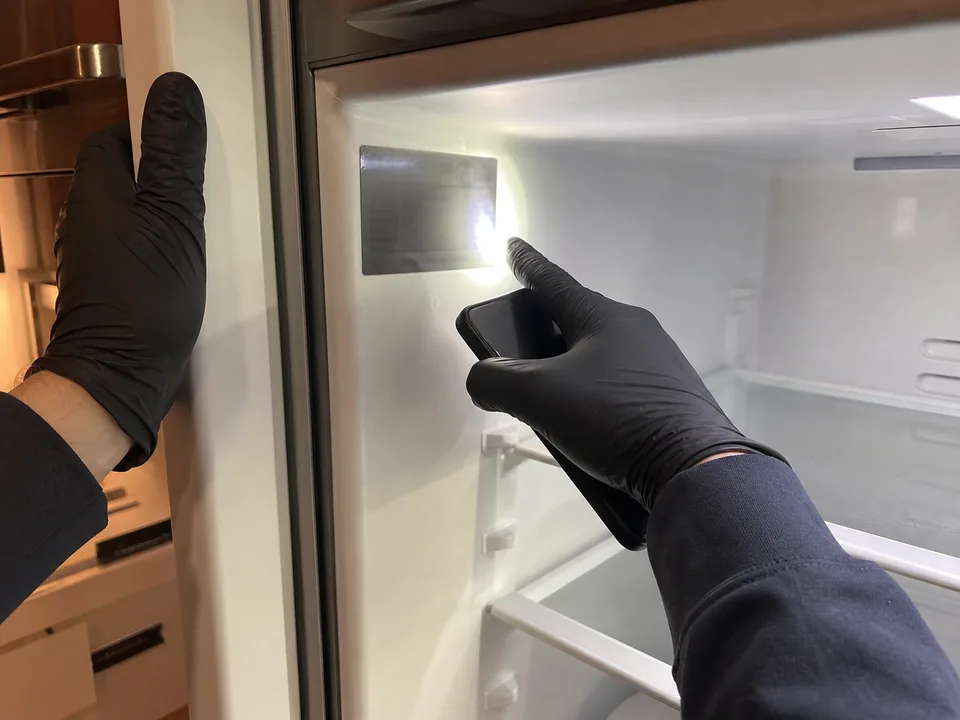
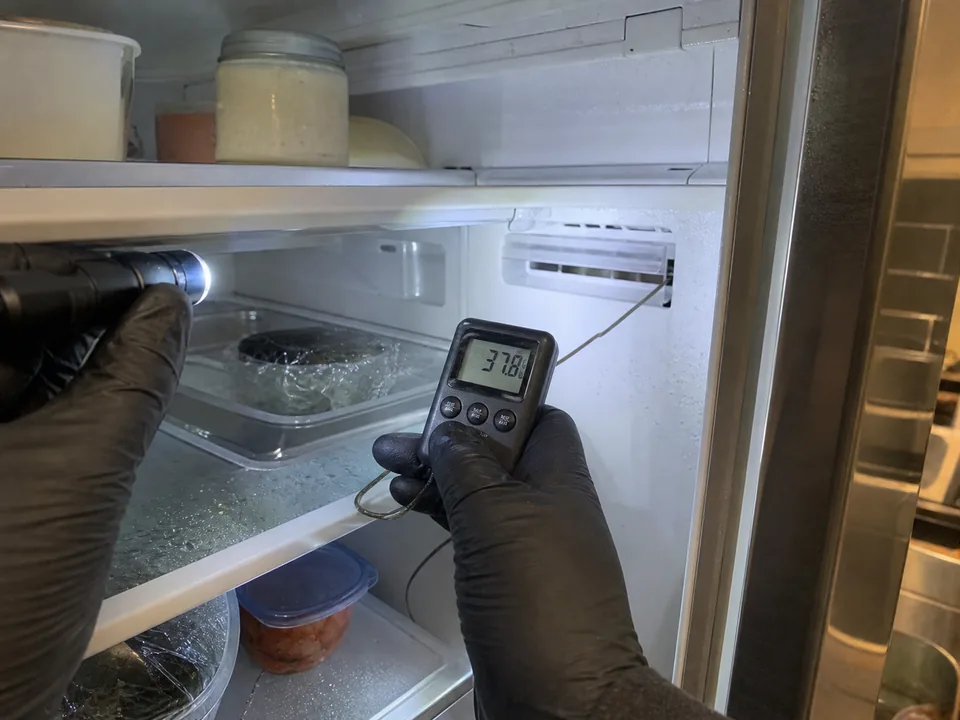
Model proof is collected from the cabinet before parts or repair scope are planned.Temperature proof is checked from the cabinet, not guessed from a display alone.
Repair economics
Published ranges still wait for model and failure proof
We publish San Rafael planning ranges because cost is one of the first things owners need to know for alarm and error-code diagnosis: Alarm history diagnostic $157-$237; Sensor or harness confirmation $375-$990; Control board diagnosis $485-$1,335; Code with warm cabinet escalation $205-$390.
Final quote variables are model family, serial range, part availability, access time, cabinet protection, water-line condition, whether the failed component is owner-visible, and whether qualified sealed-system verification is required.
Alarm history diagnostic$157-$237 for code/timing notes, actual temperature comparison and model-family lookup.Sensor or harness confirmation$375-$990 for resistance/reading comparison, connector check and false-alarm separation.Decision pointCompare verified repair cost with new-unit disruption, cabinetry work and parts timing.
San Rafael route logic
Local details are used only when they change the service plan
94901: older central homes, Mission San Rafael Arcangel area parking, and Downtown Fourth Street access can shape the appointment window.94903: northern San Rafael and Lucas Valley / Marinwood routes benefit from model-tag photos before stocking parts.Dominican and Glenwood: remodel age, hillside dust, and cabinet depth affect condenser airflow and pull-forward safety.Peacock Gap and Country Club: moisture, custom panels, and floor protection matter before gasket or sealed-system conclusions.
Workflow
What happens from booking to verification
Capture the local evidence: Record model/serial, 94901 or 94903 location, fresh-food/freezer temperatures, alarm timing and one wide cabinet photo before resets erase context.
Match the San Rafael access pattern: Use Dominican, Country Club, Peacock Gap, Sun Valley, Glenwood or Lucas Valley / Marinwood notes to plan parking, floor protection, panel weight and route timing.
Run the symptom-first test: For alarm and error-code diagnosis, start with code/timing notes, actual temperature comparison and model-family lookup. before naming a fan, gasket, valve, control board or sealed-system repair.
Set the quote boundary: Tie the written quote to the visible row Alarm history diagnostic at $157-$237, then name the variables that can still change it: serial range, access, part availability and secondary failure.
Complete the repair only after proof: Install or adjust the confirmed component, then document temperature, ice, seal, alarm or wine-zone recovery instead of closing on a verbal claim.
Customer reviews
What San Rafael Sub-Zero owners say
Real feedback from local homeowners after built-in refrigerator, freezer, wine, ice maker, and sealed-system service.
★★★★★
A repeating alarm had me worried something major was failing. They pulled the stored alarm history, measured the actual cabinet temperature with their own probe, and fixed the real cause instead of just clearing the code. The display ended up matching the probe within a couple degrees.
Frank D.Glenwood, San Rafael
★★★★★
They explained what the alarm actually meant and, just as importantly, what it didn't. Rather than swapping parts off the code, they confirmed it was a sensor and harness issue with testing first. The alarm didn't reappear during the final run. Reassuring and competent.
Sandra B.Lucas Valley / Marinwood
★★★★★
A high-temp alarm turned out to be a faulty sensor reading, not a failing system or control board. They caught it by comparing the display against an independent thermometer and checking it against the model-specific range. Saved me an expensive board I didn't need. Honest crew.
Eric M.Novato
FAQ
Questions this page answers
Can I clear the code before calling?
If the unit is stable, write down the code, temperature, and timing first. Clearing it can erase useful context. In San Rafael, pair that observation with the model tag, a fresh-food/freezer reading and a wide cabinet photo. The relevant planning line is alarm history diagnostic at $157-$237, usually 45-95 min after access is confirmed.
Do all Sub-Zero models use the same codes?
No. Codes and alarms vary by model family, control generation, and serial range, so the model tag is part of the diagnosis. In San Rafael, pair that observation with the model tag, a fresh-food/freezer reading and a wide cabinet photo. The relevant planning line is sensor or harness confirmation at $375-$990, usually 1-3 hours after access is confirmed.
What San Rafael detail changes alarm and error-code diagnosis?
Neighborhood access can change the first step. Dominican and Sun Valley homes often have older built-ins and tighter floors, Country Club and Glenwood can add hillside dust and panel weight, and Peacock Gap moisture can expose weak seals. The diagnosis still starts with model proof, temperatures and safe access photos.
What price range should I use for alarm and error-code diagnosis?
Use $157-$237 for alarm history diagnostic as the planning line on this page. That range includes code/timing notes, actual temperature comparison and model-family lookup. Final pricing changes only after the technician confirms model family, cabinet access, part availability and whether a secondary symptom is hiding the real failure.
Which number should be written down before alarm and error-code diagnosis?
Write down the fresh-food temperature, freezer temperature, alarm time and model/serial tag before repeated resets. For ice or water symptoms, add filter age and cube shape; for wine storage, add set point and actual zone temperature. Those numbers make sensor or harness confirmation easier to confirm.
Ready for the next step?
Call or book online
Use the phone number or external booking page. Have the model tag, symptom timing, displayed temperatures, urgency, and cabinet-access notes ready.